- Home
- Community Blog
- Double Leg vs Single Leg Takedown: Which to Learn First
Double Leg vs Single Leg Takedown: Which to Learn First
Learn the double leg first. It teaches the two movements every takedown depends on, the level change and the penetration step, and it's the highest-percentage shot for most beginners. Add the single leg next, because it's safer against bigger opponents and keeps you out of front headlocks and guillotines when your entry isn't perfect.
Both takedowns show up in wrestling, BJJ and MMA, and the best grapplers chain them together. Here's how each one works, where each one fits, and the mistakes that stop beginners from finishing.
Why Every Grappler Needs a Takedown
Every match and every MMA fight starts standing. If you can't take the fight down, you're relying on your opponent to give you the position you want. A reliable takedown lets you choose where the fight happens: on top in BJJ, controlling the pace in wrestling, or avoiding strikes in MMA.
You don't need a whole wrestling playbook. Most successful grapplers build their game around one or two takedowns they can hit on anyone, and the double leg and single leg are the best two to start with.
Double Leg vs Single Leg at a Glance
| empty | Double leg | Single leg |
|---|---|---|
| What you grab | Both legs, behind the knees | One leg, at the knee or thigh |
| Key movement | Deep penetration step and drive | Level change and angle off the line |
| Distance | Requires you to close more distance | Works from a little farther out |
| Best against | Opponents standing square or reaching | Opponents in a staggered stance or bigger than you |
| Main risk | Guillotine or sprawl if your head drops | Getting stuck holding a leg with no finish |
| Learn it | First | Second |
How to Do a Double Leg Takedown
- Set it up. Get your opponent to react high: a jab, a fake, or a collar tie. You want their weight up and their hands away from their hips.
- Change levels. Bend at the knees, not the waist. Your back stays straight and your head stays up.
- Penetration step. Step deep between their feet with your lead leg, dropping your lead knee toward the mat.
- Head position. Put your head to one side of their body, tight against the ribs. Never put it in the middle where it can be trapped.
- Grab and drive. Wrap both arms behind the knees, pull them in tight, and drive forward and at an angle. Turning the corner with your back foot finishes the shot far more reliably than driving straight.
How to Do a Single Leg Takedown
- Set it up. Attack the lead leg after a fake or a feint. Hand fighting to clear the arm on that side helps.
- Change levels and step in. Drop your level and step your lead foot to the outside of their lead foot.
- Secure the leg. Wrap both arms around the leg and bring it up between your knees or to your hip. Keep your head on the inside, pressed into their chest.
- Finish. Run the pipe (drive your shoulder in and turn the corner toward the mat), dump the leg to the side, or lift and trip the standing leg. Pick one finish and drill it until it's automatic.
Chain Them Together: Double to Single
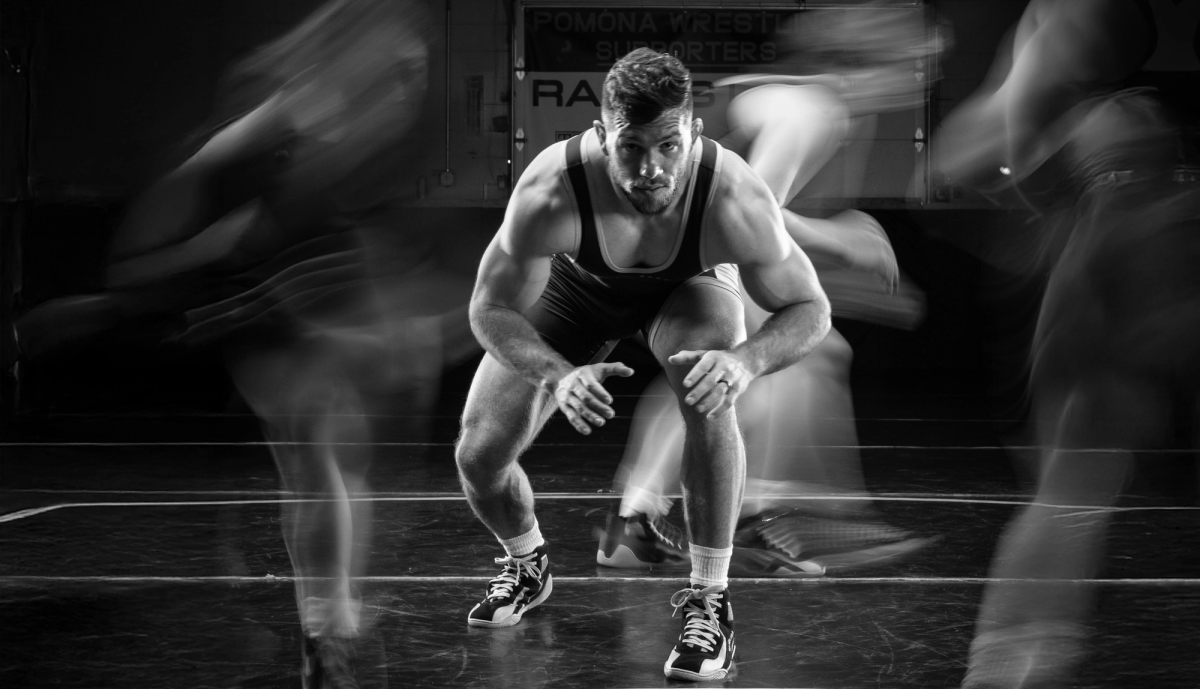
The double leg and single leg work best as a pair. When you shoot a double and your opponent sprawls or steps one leg back, you often end up holding one leg anyway. Instead of forcing the double, switch to the single: keep your head tight, secure the leg that's still in your grip, and finish from there.
It works the other way too. If you're on a single and your opponent squares back up, their far leg comes back within reach, and you can drop down and switch to the double. Drilling both shots together teaches you to finish whatever position your opponent gives you.
Common Takedown Mistakes
- Reaching instead of changing levels. If your hands arrive before your hips, you'll get sprawled on.
- Dropping your head. Looking at the mat exposes your neck to a guillotine or front headlock.
- Stopping your feet. A shot ends when you stop driving. Keep your legs moving until they're on the mat.
- Shooting from too far out. If you can't reach their hips with your penetration step, set up again before shooting.
Drills to Build Your Takedowns
Good takedowns come from repetition, not from one great class. Add these drills to the start or end of your sessions.
| Drill | How to do it | What it builds |
|---|---|---|
| Level changes | From your stance, drop your hips and pop back up for 30 seconds, keeping your back straight and head up | The movement every shot starts with |
| Penetration steps | Step deep and drop your lead knee toward the mat, then return to stance; 10 reps per side | Distance and drive |
| Shadow shots | Shoot doubles and singles at an imaginary opponent, finishing each with a turn of the corner | Smooth entries without a partner |
| Partner fit-ins | Your partner stands still while you shoot to the grip and freeze, checking head and hand position | Correct positioning |
| Shot and sprawl | Take turns shooting and sprawling at a light, steady pace | Timing, and defense against the shot |
Start slowly and focus on form. Speed comes once the movement is automatic.
Double Leg vs Single Leg in BJJ and MMA
In BJJ, many players pull guard rather than wrestle, so a solid takedown is a real advantage. The single leg is popular because it leaves you less exposed to the guillotine, which BJJ players hunt for.
In MMA, strikes make the setup easier: fighters react to a punch by lifting their hands, which opens the hips. The double leg against the cage is one of the most common takedowns in the sport, while the single leg is a strong option when an opponent is kicking.
Train Like a Wrestler
Takedown drilling is hard on your feet, knees and skin. Wrestling shoes give you grip on the mat for driving through shots, and a fitted rash guard or singlet keeps your partner from grabbing loose fabric. Our guide to the best wrestling gear for beginners covers the essentials.
Wrestling season gear is 30% off for Black Friday. Shop wrestling shoes, men's singlets and women's singlets.
Takedown FAQ
Which takedown is easiest for beginners? The double leg. It has the simplest mechanics and teaches the level change and penetration step every other takedown uses.
Is the single leg safer than the double leg? Generally, yes. Your head stays on the inside and you're less exposed to guillotines, which is why many BJJ and MMA athletes favor it.
How do I stop getting sprawled on? Change levels before you shoot, shoot from closer, and set up with a fake or a strike so your opponent's weight is high when you go.
Do I need wrestling shoes to learn takedowns? Not at first, but they give you much better grip for driving through shots, and many wrestling rooms require them.
How long does it take to learn a takedown? Most people can hit a clean double leg on a cooperative partner within a few weeks of regular drilling. Landing it against resisting opponents takes months of live practice.
Can I practice takedowns at home? Yes. Level changes, penetration steps and shadow shots need no partner. Save live takedowns for the mat with a coach and a training partner.
What's the best takedown for BJJ? Many BJJ players start with the single leg because it keeps them safer from guillotines, but the double leg is the best foundation to learn first.